Project Lazarus — Autonomous Recovery at the Edge
Executive Summary
Section titled “Executive Summary”Project Lazarus is a fictional recovery architecture designed to test an engineering-heavy paper on Zombee.Buzz. The system detects a degraded component, diagnoses the failure, selects a bounded recovery action, and validates the result.
Objectives
Section titled “Objectives”- Detect failure without depending on the failed component.
- Prefer the least disruptive recovery action.
- Escalate only after bounded retries.
- Record enough evidence to explain what happened.
- Confirm recovery rather than assuming success.
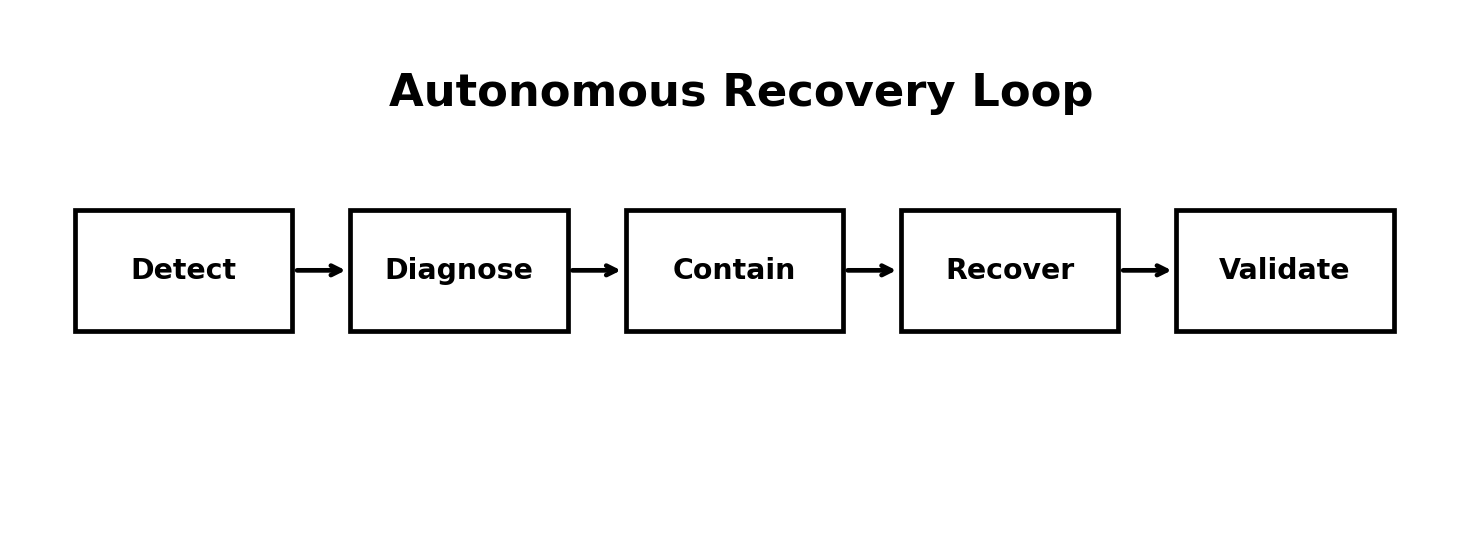
Figure 1. Five explicit recovery phases.
Recovery State Machine
Section titled “Recovery State Machine”HEALTHY | | heartbeat lost vDEGRADED ---- retry succeeds ----> HEALTHY | | retry budget exhausted vRECOVERY | +---- validation passes --------> HEALTHY | +---- validation fails ---------> ESCALATEDExample Policy
Section titled “Example Policy”recovery: heartbeat_timeout: 30s retry_limit: 2 actions: degraded: - restart_service - validate persistent_failure: - reboot - validate unrecovered: - enter_advanced_recovery - publish_incidentSimulated Results
Section titled “Simulated Results”| Failure | Detection | Recovery | Result |
|---|---|---|---|
| Service crash | 2.1 s | 8.4 s | Recovered |
| Agent hang | 31.0 s | 44.2 s | Recovered |
| Corrupt state | 30.8 s | 2 m 18 s | Escalated |
| Network loss | 5.4 s | — | Degraded safely |
Failure Walkthrough
Section titled “Failure Walkthrough”Step 1 — Detect
Section titled “Step 1 — Detect”The independent observer misses expected heartbeats and changes local posture.
Step 2 — Diagnose
Section titled “Step 2 — Diagnose”The system distinguishes loss of the application from loss of the operating environment.
Step 3 — Recover
Section titled “Step 3 — Recover”A policy engine selects the lowest-cost action still available under the retry budget.
Step 4 — Validate
Section titled “Step 4 — Validate”Recovery is not complete merely because an action executed. The original evidence source must return and remain stable.
Open Questions
Section titled “Open Questions”- How much state should survive recovery?
- Which evidence must be cryptographically verifiable?
- Who owns policy when local and remote instructions conflict?
- When should the system stop acting autonomously?
Conclusion
Section titled “Conclusion”A useful recovery architecture is defined by how well it can detect, bound, explain, and validate its actions.